
Knowledge
Is This the Final Era When Creative Freedom Comes to an End?
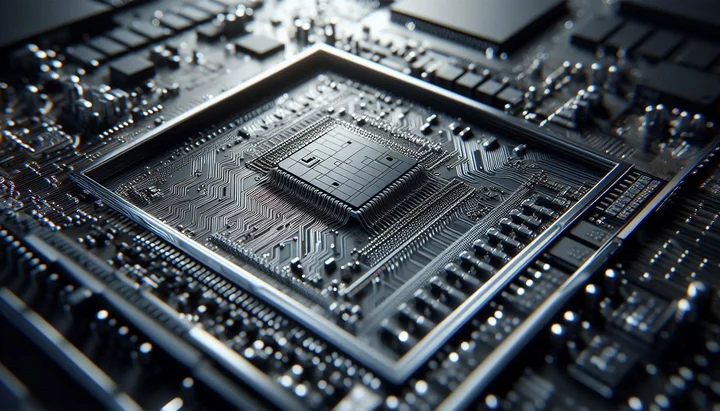
Is This the Last Era When Creative Freedom Comes to an End?
Have you ever felt that artificial intelligence is gnawing away at your imagination? In 2026, we are living in an era of remarkable technological advancement while simultaneously witnessing an important value—creative freedom—being threatened. An era where AI creates artwork, writes novels, and even scripts for films. Will human creativity lose its place? Today, let’s dive deep into this serious question.
The advancement of artificial intelligence has certainly brought convenience, but in the realm of creation, it is raising serious ethical and social issues alongside positive aspects. Can we truly call the results created by AI genuine ‘creative works’? And if AI replaces human creative activity, how will our future change?
The Ethical Dilemma of AI-Generated Content: Plagiarism and Copyright
Content generated by AI inevitably learns from and utilizes existing data. The problem is that the possibility of copyright infringement in this process is very high. For example, if AI writes a novel by mimicking the style of a specific author, this could be considered a clear act of plagiarism. However, unlike humans, AI cannot bear legal responsibility, which creates the problem of unclear liability.
Recently, the European Union (EU) is discussing legislation to strengthen copyright regulations for AI-generated content. AI developers must clearly disclose the sources of training data and are obligated to implement technical measures to prevent copyright infringement.
An even more complex issue is who should own the copyright of content generated by AI. The AI developer? The AI user? Or the AI itself? To date, no clear international consensus has been reached, and each country takes different positions. This uncertainty can plunge the creative ecosystem into chaos and serve as a factor that undermines creators’ motivation.
Intensifying Polarization in the Creative Market: AI and Human Competition
The development of AI technology is raising concerns that it could further intensify polarization in the creative market. Since AI can produce large amounts of content quickly and inexpensively, major corporations and platforms with capital are likely to aggressively utilize AI to dominate the market. On the other hand, independent creators with relatively limited resources may be pushed out in competition with AI and lose their place.
Important Notice: According to a 2025 government survey, content production volume by AI-utilizing companies increased 300% compared to the previous year, while average income for independent creators decreased by 20%.
This polarization can damage the diversity of the creative ecosystem and result in the production of only homogenized content. Creative freedom contributes beyond the simple act of making content—it helps create a healthy society where diverse voices and perspectives coexist. If AI compromises the diversity of creation, this will result in a loss for our entire society.
The Decline of Human Creativity: Increasing AI Dependency
While AI being used as a tool to assist creative activities has positive aspects, we must not overlook the fact that excessive dependency can atrophy human creativity. As we become accustomed to the convenience that AI provides, our ability to think and ponder independently can deteriorate.
- Decline in Problem-Definition Ability: By relying on solutions provided by AI, the ability to define and analyze problems independently can be weakened.
- Lack of Originality: Since AI-generated content is ultimately based on existing data, it can be difficult to create truly new ideas.
- Decreased Critical Thinking Ability: By uncritically accepting information provided by AI, critical thinking ability can decline.
Ultimately, AI is merely a tool and cannot replace human creativity. We must utilize AI while making efforts to maintain and develop human-unique creativity.
Our Efforts to Protect Creative Freedom
So, what efforts should we make to protect creative freedom in the era to come?
- Strengthening AI Ethics Education: We should strengthen education on the ethical issues of AI technology so that creators can utilize AI responsibly.
- Strengthening Copyright Protection: We must clarify copyright regulations for AI-generated content and strengthen monitoring and penalties for copyright infringement.
- Expanding Support for Independent Creators: We should expand practical support such as expanded creative grants and provision of creative spaces so that independent creators can survive in competition with AI.
- Fostering Human-Centered Creative Culture: While utilizing AI technology, we must foster a creative culture that respects human-unique creativity and emotionality.
Rather than blindly accepting the development of AI technology, we must approach it carefully in consideration of human values and ethics. Creative freedom is an important value that forms the foundation of a democratic society, and our efforts to protect it must continue endlessly.
Share your thoughts right now! In the AI era, what can we do to protect creative freedom? Feel free to share your opinions in the comments. Your participation can contribute to creating a better future.